

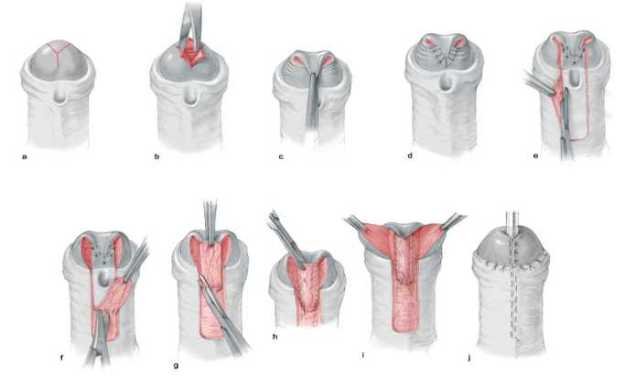
The primary treatment for hypospadias is surgical correction. Surgery is typically performed to improve both the function and appearance of the penis. The need for repair largely depends on the location of the urethral opening and the severity of the condition.
When the urethral opening is located farther from its normal position at the tip of the penis, the urinary stream may be directed downward, making urination more difficult and sometimes requiring the child to urinate while seated. The presence of chordee (a downward curvature of the penis) can further affect urinary function and may become more noticeable as the child grows.
In some cases, untreated hypospadias may affect future sexual function and fertility. An abnormal urinary opening can alter the direction of ejaculation, potentially impacting natural conception. Significant penile curvature may also interfere with sexual intercourse or cause discomfort during erections.
It must be kept in mind, however, that although the most minor forms of hypospadias are insignificant in physiologic terms, they too may merit repair on the basis of the potential psychological stress associated with having a genital anomaly.
Surgical Care
The goals of surgical treatment of hypospadias are as follows:
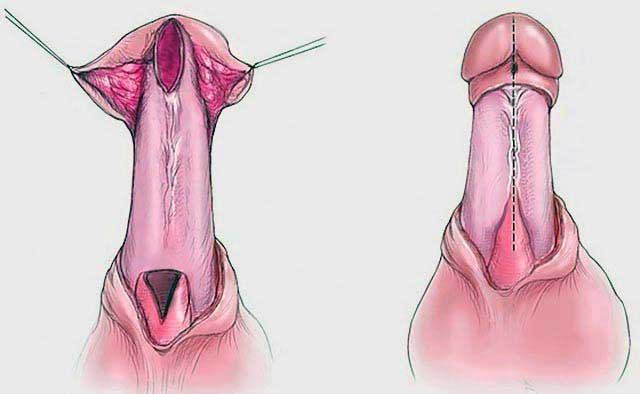
The open reconstruction of urethral stricture disease, also called urethroplasty, may involve surgery to remove the involved segment and re-attach the two normal ends. This is called excision and primary anastomosis. This procedure is best suited for short strictures involving the bulbar or membranous urethra in particular. When this repair is not possible, tissue can be transferred to augment and therefore widen the narrow segment to a normal caliber. For example, the urethra can be augmented using penile skin. Other tissues that can be used to reconstruct the urethra include a graft of buccal mucosa (skin inside the cheek). When the above procedures are not an option, alternatives include a two-stage repair where a buccal mucosa and/or a split-thickness skin graft is placed along the undersurface of the penis, and later rolled into a new urethra (neo-urethra). The choice of repair is individual and influenced by the length and location of the stricture, the availability of local tissue, and other factors.
Recovery after Urethral Stricture SurgerySubsequent to surgery, the length of hospitalization varies but generally does not exceed 5 days. Patients seldom have any significant pain or swelling in the penis or scrotum. However, if a buccal mucosa graft is harvested from the inside of the cheek, it is not uncommon for the mouth to be sore. This slowly resolves day by day, and pain medications are given as needed. Patients can immediately resume a normal diet after surgery. However, patients who undergo buccal mucosa graft harvests generally prefer a soft diet initially. When patients are discharged, they are encouraged to remain inactive for several weeks. Often, catheters remain for 2-3 weeks. We then remove the catheters after filling the bladder with x-ray contrast. Then, as the patient voids, a film is taken. This is a voiding cystourethrogram (VCUG). If the urethra is nicely healed, the patient leaves the office "tube free" and resumes normal urination. The vast majority of patients report a "night and day" difference in their stream, and often compare their stream to a “fire hose” as the change is often dramatic..

We must explain to you how all seds this mistakens idea off denouncing pleasures and praising pain was born and I will give you a completed accounts off the system and expound.
Consultation