



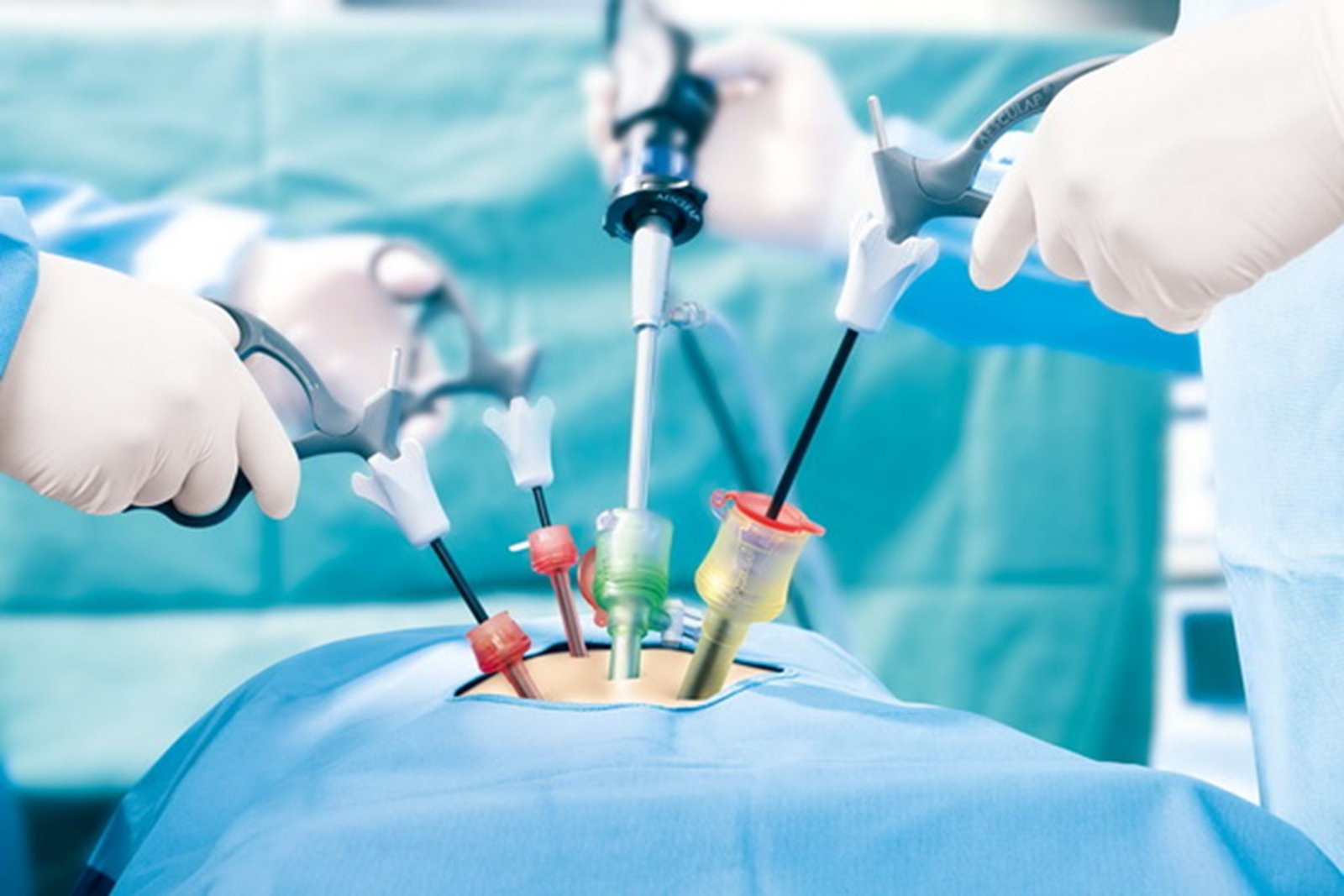
Laparoscopic radical nephrectomy is performed under general anesthesia to ensure patient comfort and safety throughout the procedure. Although the duration of surgery may vary depending on individual circumstances, the operation typically takes around 3 to 4 hours to complete.
During a laparoscopic radical nephrectomy, the surgeon makes three to four small keyhole incisions, each typically less than 1 cm in length, in the abdominal wall. These tiny openings allow the insertion of a laparoscope—a specialized high-definition camera—and other surgical instruments through ports known as trocars.
The laparoscope provides up to 10-times magnification of the surgical field, enabling the surgeon to perform the procedure with exceptional precision and enhanced visualization while avoiding large incisions. To create adequate working space, the abdomen is gently inflated with carbon dioxide gas, which is safely released once the surgery is completed.
The affected kidney is carefully separated from surrounding structures, including the liver, spleen, and intestines. The kidney's blood vessels are then securely sealed and divided, allowing for safe removal of the organ while minimizing blood loss. Depending on the extent of the disease, the surgeon may also remove surrounding fatty tissue, nearby lymph nodes, and, in some cases, the adjacent adrenal gland if the tumor is large or located close to it.
After removal, the kidney and tumor are placed inside a sterile retrieval bag and extracted intact through a slightly enlarged existing incision. Finally, all incisions are meticulously closed using advanced cosmetic surgical techniques to promote faster healing and reduce visible scarring.
Laparoscopic Partial Nephrectomy (LPN) is a minimally invasive surgical procedure that effectively treats kidney tumors while preserving healthy kidney tissue. Compared to traditional open nephron-sparing surgery, LPN offers similar cancer-control outcomes with the added benefits of reduced blood loss, less postoperative pain, faster recovery, shorter hospital stays, and improved cosmetic results. By preserving kidney function, this advanced approach helps maintain long-term renal health while delivering excellent surgical and oncological outcomes. LPN has become an important treatment option in the management of kidney masses, combining precision, safety, and enhanced patient recovery.
Laparoscopic Partial Nephrectomy (LPN) is particularly recommended for patients with tumors in both kidneys or those who have only one functioning kidney, where preserving healthy kidney tissue is essential. It may also be an appropriate treatment option for individuals with inherited kidney cancer syndromes, including Von Hippel–Lindau disease, hereditary leiomyomatosis, and hereditary papillary renal cell carcinoma.
Patients with chronic kidney disease often benefit from nephron-sparing surgery, as it helps maintain long-term kidney function. This approach is also valuable for individuals with conditions such as diabetes, hypertension, recurrent kidney stones, or severe obesity, which may increase the risk of future kidney impairment.
Today, partial nephrectomy is considered the preferred treatment for many small, localized kidney tumors when technically feasible. While the procedure was initially reserved for smaller, outward-growing tumors, advancements in laparoscopic techniques now allow surgeons to successfully treat a wider range of kidney masses, including centrally located, deeply embedded, and multiple tumors.

We must explain to you how all seds this mistakens idea off denouncing pleasures and praising pain was born and I will give you a completed accounts off the system and expound.
Consultation