



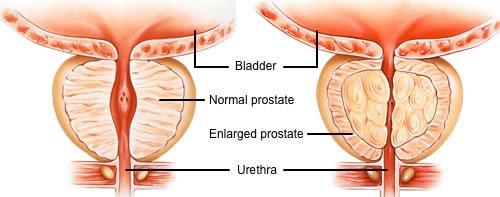
The prostate gland is a small, walnut-shaped organ located below the bladder and in front of the rectum. It surrounds the urethra, the tube responsible for carrying urine from the bladder out of the body.
As the prostate enlarges, it can compress the urethra and restrict the normal flow of urine. In the early stages of prostate enlargement, the bladder muscle compensates by working harder to push urine through the narrowed passage. Over time, this increased effort may cause the bladder to become more sensitive, leading to symptoms such as frequent urination, a sudden urge to urinate, and difficulty emptying the bladder completely.
Prostate enlargement occurs due to an increase in the number of prostate cells, a condition known as benign prostatic hyperplasia (BPH). Although the exact cause of this cellular growth is not fully understood, several factors are believed to contribute to its development. These may include age-related hormonal changes involving male hormones (androgens), estrogen levels, growth factors, and other biological signaling mechanisms that regulate cell growth.
ENLARGED PROSTATE SYMPTOMS AND CAUSESIn men, urine flows from the bladder through the urethra. BPH is a benign (noncancerous) enlargement of the prostate that blocks the flow of urine through the urethra. The prostate cells gradually multiply, creating an enlargement that puts pressure on the urethra - the "chute" through which urine and semen exit the body.
As the urethra narrows, the bladder has to contract more forcefully to push urine through the body. Over time, the bladder muscle may gradually become stronger, thicker, and overly sensitive; it begins to contract even when it contains small amounts of urine, causing a need to urinate frequently. Eventually, the bladder muscle cannot overcome the effect of the narrowed urethra so urine remains in the bladder and it is not completely emptied.
Symptoms of enlarged prostate can include:When the bladder does not empty completely, you become at risk for developing urinary tract infections. Other serious problems can also develop over time, including bladder stones, blood in the urine, incontinence, and acute urinary retention (an inability to urinate). A sudden and complete inability to urinate is a medical emergency; you should see your doctor immediately. In rare cases, bladder and/orkidney damage can develop from BPH.
TreatmentIt can be done by TURP, TUIP, HOLEP and Open Prostectomy.

We must explain to you how all seds this mistakens idea off denouncing pleasures and praising pain was born and I will give you a completed accounts off the system and expound.
Consultation