



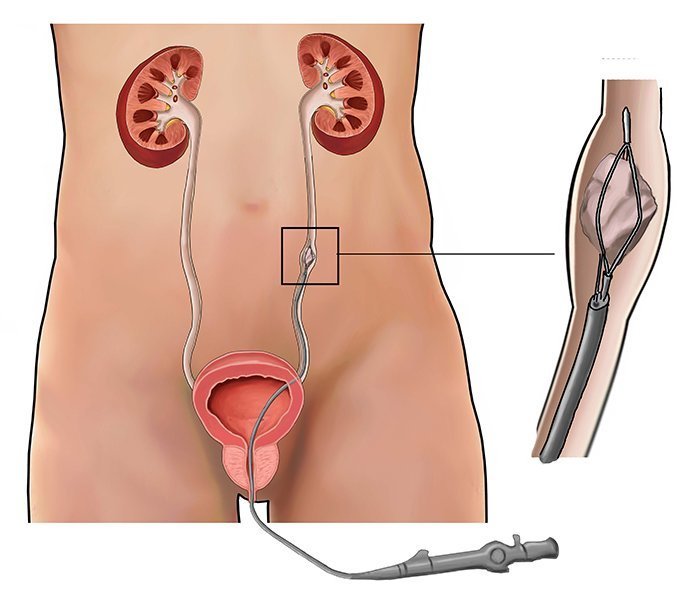
Ureteroscopy (URS) is a minimally invasive procedure used to diagnose and treat stones located in the urinary tract. During the procedure, a thin, flexible telescope called a ureteroscope is gently passed through the urethra and bladder into the ureter to locate the stone. If necessary, a laser is used to break the stone into smaller fragments, which are then removed using specialized instruments.
While many urinary stones pass naturally, approximately 10–15% require surgical treatment. Ureteroscopy is highly effective, with a success rate of about 95% for stones located in the lower ureter and 85–90% for stones in the upper ureter and kidney.
ProcedureUreteroscopy is typically performed as an outpatient procedure, allowing most patients to return home the same day. The surgery is usually carried out under general anesthesia, although regional anesthesia may be appropriate in certain cases.
To minimize the risk of infection, antibiotics are generally administered before the procedure. The duration of the surgery depends on the size, location, and complexity of the stone. Simple cases may take as little as 20 minutes, while larger or more challenging stones may require an hour or longer to treat effectively.

We must explain to you how all seds this mistakens idea off denouncing pleasures and praising pain was born and I will give you a completed accounts off the system and expound.
Consultation